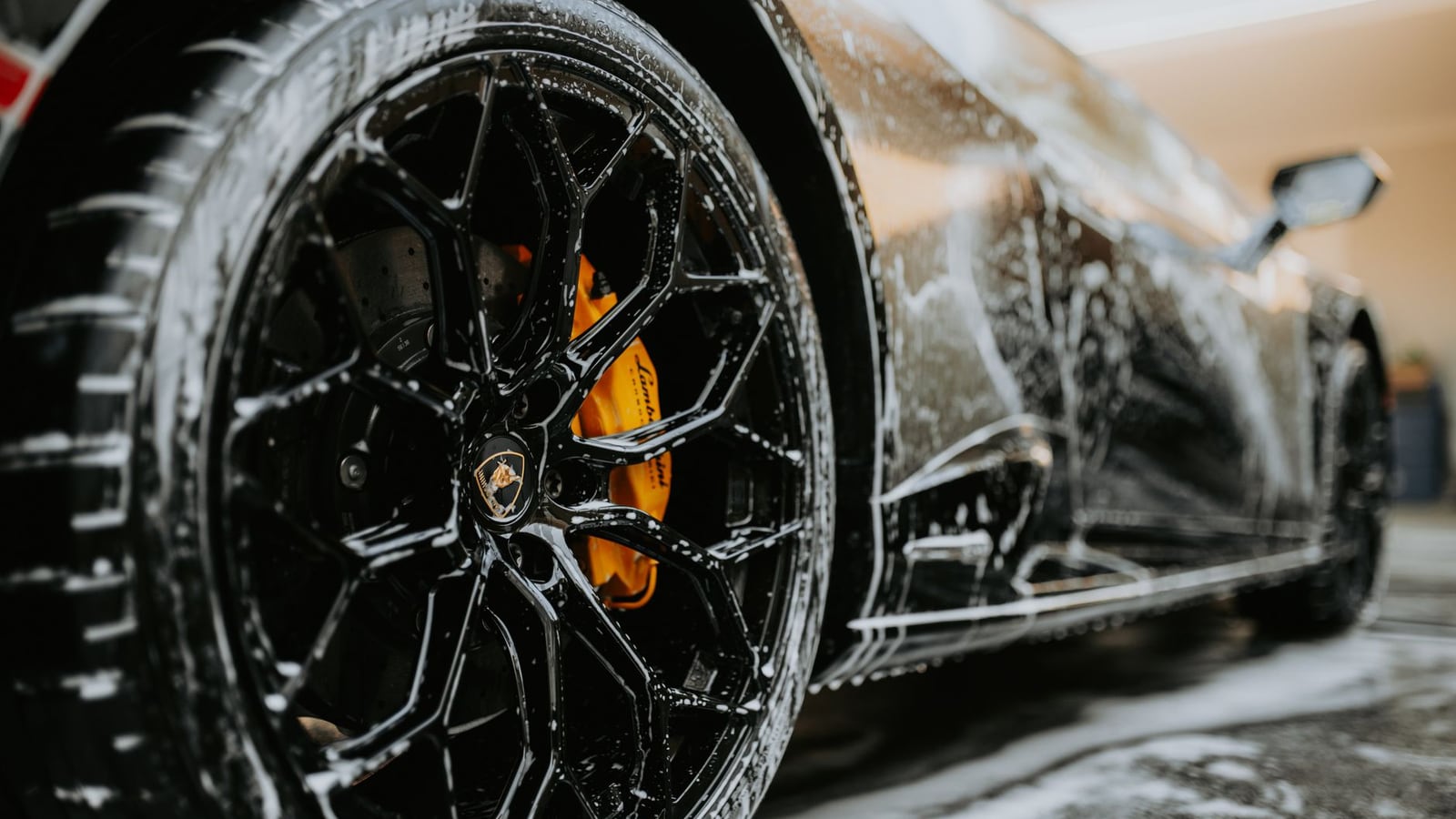
"Wash it less" is the line every ceramic coating buyer hears, and it's technically true but useless as a schedule. Less than what? The coating protects the clear coat and makes dirt let go easier, but it does not stop dirt from landing on the car, and it does not maintain itself. What you actually need is a recurring routine, not a vibe.
Start with the two-week clock
Don't touch the car for at least two weeks after installation. Ceramic Pro's aftercare guidance is explicit on this: curing takes two to three weeks depending on conditions, and washing before that window closes can disrupt the cure. Let it sit.
Once it's cured, the baseline is a wash every two weeks. That's not a marketing number, it's what Ceramic Pro recommends to avoid letting contamination build up on the surface before it hardens or bonds. A coating makes contaminants easier to remove, but it doesn't make them stay off. Bird droppings, tree sap, brake dust, and road film all still land on a coated car, and the longer they sit, the more work removal takes later. Two weeks is the interval that keeps ahead of that buildup instead of chasing it.
If you're doing quick rinses, spray-and-wipe details, or a touchless wash in between, that's fine, but it isn't a substitute for a full wash. Per Ceramic Pro, a complete two-bucket hand wash should happen at least every 60 days regardless of what else you're doing to the car, because contaminants that a rinse or a spray can't lift will still be bonded to the surface. Think of the two-week wash as maintenance and the 60-day deep wash as the floor you don't go below.
Do the two-bucket wash correctly
The two-bucket method isn't complicated, but it's easy to do halfway and lose most of the benefit. Ceramic Pro's instructions and ValetPRO's breakdown describe the same core setup: one bucket with soapy water, one with plain rinse water, and ideally a grit guard at the bottom of each.
Here's the sequence that matters:
- Dip the mitt in the soapy bucket and wash one panel or section.
- Before going back to the soap bucket, dunk and swirl the mitt in the rinse bucket first.
- Only then re-load the mitt with soap and move to the next section.
The grit guard is doing real work here. As ValetPRO explains, it sits at the bottom of the bucket and lets dirt and grit settle below it, out of reach of the mitt when you dip back in. Without that separation, you're just stirring abrasive particles back into the water you're about to drag across the paint. That's how swirl marks happen even on a coated car: the coating protects against chemical etching and UV, not against physically grinding grit into the surface with a dirty mitt.
Work top to bottom, panel by panel, in straight lines rather than circles, and don't lean on the mitt. If the car is heavily soiled, a pre-rinse or foam pre-wash before you start the bucket routine cuts down on how much grit the mitt has to deal with in the first place. None of this changes because the car is coated. The coating protects the clear coat underneath; it doesn't protect against poor wash technique on top of it.
Decontaminate and reapply on a schedule
Washing keeps the surface clean day to day, but two other maintenance tasks run on longer clocks and are easy to forget because nothing looks obviously wrong in between.
The first is decontamination. Even with regular washing, some contaminants, mainly embedded iron particles from brake dust, bond to the coating's surface rather than sitting loose on top, and soap alone won't pull them out. CarPro's CQUARTZ maintenance guide recommends decontaminating with a dedicated product like CARPRO IronX every three to six months. You'll usually notice this is overdue when the paint starts feeling rough under your hand even right after a wash; that's bonded contamination the wash isn't removing.
The second is topping up the coating's protection with a spray sealant. CarPro's guidance calls for a topper such as CARPRO Reload or EliXir every three to twelve months, applied on a schedule or ahead of anything you want the car looking its best for. This isn't a wax, and it isn't optional maintenance if you want the beading and slickness the coating was sold on to keep performing; the topper is what refreshes the hydrophobic surface between the coating's own service intervals. Ceramic Pro is worth noting here too: their aftercare page is specific that regular wax is unnecessary and won't bond to the coating, so any product you add on top should be one made for coated surfaces, not a leftover carnauba wax from before you had the coating done.
Put together, the whole thing is four recurring dates, not four separate philosophies: wash every two weeks, full two-bucket wash at least every 60 days, decontaminate every three to six months, and top up the sealant every three to twelve months. The easiest way to actually hit those intervals is to write them down the day you get the coating done and log the date every time you knock one out. If you're tracking maintenance on the car anywhere else already, this is worth adding as its own recurring entry rather than trying to remember it from the last time the paint looked dull.
Hero photo by Luke Miller on Pexels.