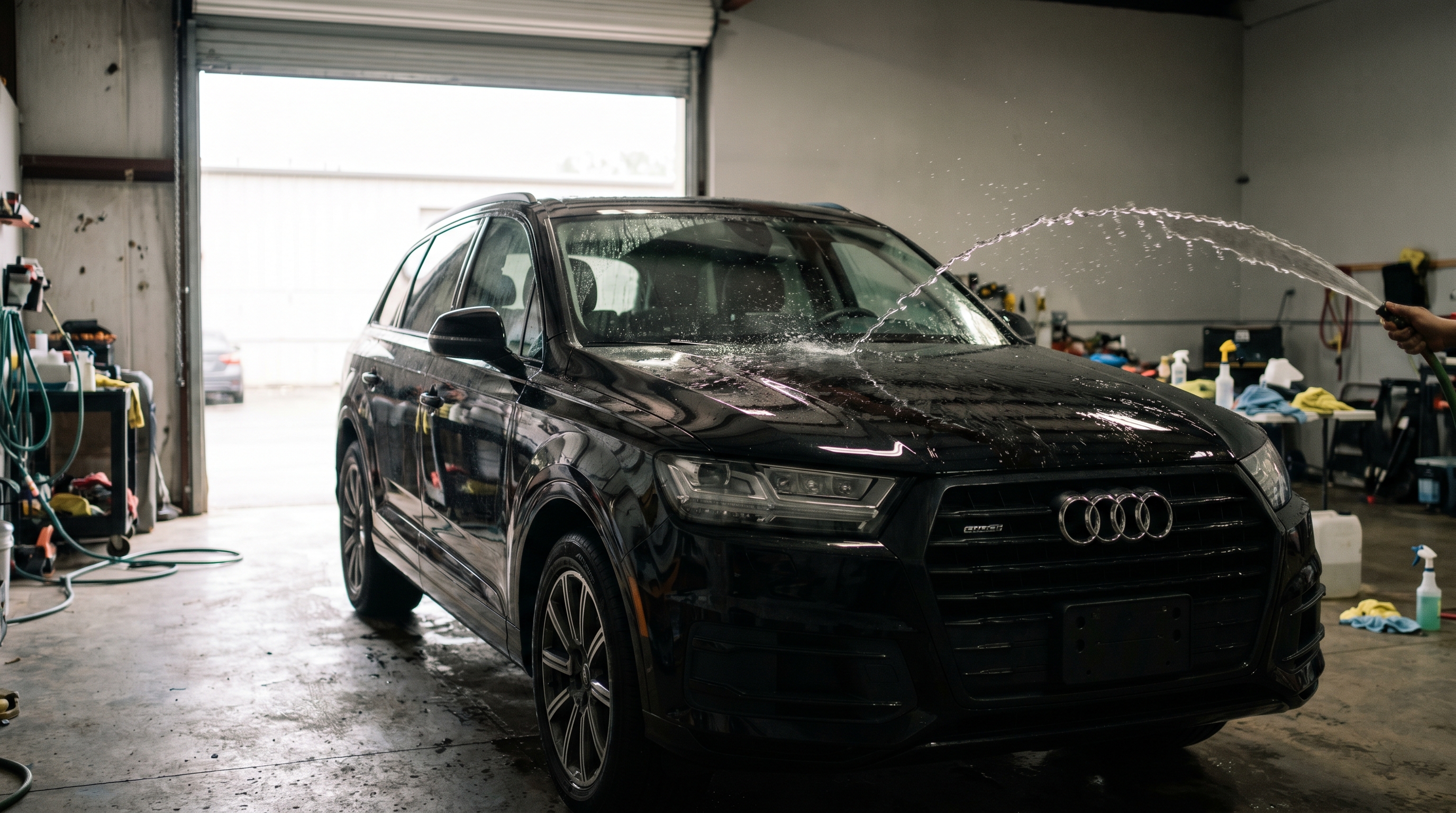
I almost dropped $6,000 on paint protection film for a daily driver.
A friend had just gotten a full-body wrap on his M3 and wouldn't shut up about it. "Rock chips are gone. Bird droppings? Doesn't matter. The film heals itself." He sounded like an infomercial. But the car did look incredible.
So I got a quote. Full front end, rocker panels, rear bumper kick zones. $2,800. Full body? $5,500 - $6,200 depending on the shop. For a car I drive to work and park in a garage.
That's when I started actually thinking about it.
What PPF Actually Does
Paint protection film is a clear urethane layer that goes over your paint. It absorbs impacts - rock chips, road debris, minor scratches - so your clear coat doesn't have to.
Good PPF self-heals. Meaning light scratches in the film disappear with heat - sunlight, warm water, a heat gun. The film takes the hit and recovers. Your paint stays factory.
That sounds amazing. And it is. The question is whether you need it.
The Real Cost
Let's talk numbers, because this is where most people stop thinking clearly.
| Option | Cost | What you get |
|---|---|---|
| Partial front end | $1,200-2,200 | Hood, fenders, bumper, mirrors. Highest-impact zones, lasts 5-10 yrs |
| Full body wrap | $4,500-7,000+ | Quality film, skilled install (60-70% of the cost is labor) |
| DIY kit | $300-800 | Partial front end. Patience required, not for beginners |
Premium films (XPEL Ultimate Plus, SunTek Ultra, 3M Pro Series) run $25-35 per linear foot.
Compare that to a full ceramic coating at $800 - $1,500. Or a good sealant at $40 a bottle. PPF is in a completely different price bracket.
When PPF Is Worth Every Dollar
Highway commuters. If you're doing 30,000+ miles a year on highways, rock chips are inevitable. PPF on the front end pays for itself by preventing repaints.
Dark and soft paints. Black, deep blue, dark red - these show every chip and swirl. Softer paint (looking at you, German manufacturers) chips easier. PPF is almost mandatory if you care about the finish.
Lease returns and resale. A clean front end with zero chips can save you hundreds on lease-end inspections. And if you're selling, a documented PPF install tells the buyer you cared about the car. Same principle as tracking your mods - documentation creates value.
Track and canyon cars. If you're pushing it on weekends, debris hits different at speed. PPF on the front end and rocker panels is insurance.
When PPF Is Overkill
Garage queens and weekend drivers. If your car sees 3,000 miles a year and lives in a climate-controlled garage, PPF is paying for protection against threats that barely exist.
Older dailies you're not keeping. A 2019 with 80K miles and a couple existing chips? PPF won't fix what's already there. Touch-up paint and a good ceramic coat make more sense financially.
The full-body trap. This is where I see people overspend. Full body PPF on a daily driver is a $5K+ expense that protects areas that rarely get hit. Doors, roof, trunk - they don't take rock chips. A partial front-end wrap covers 90% of the real risk at 40% of the cost.
When the math doesn't add up. If your car is worth $25K, a $6K full wrap is nearly 25% of the vehicle's value in protection. That's hard to justify unless the car is appreciating or you're keeping it forever.
What I Actually Did
I went partial. Hood, front bumper, fenders, mirrors, and a strip on the rocker panels. Cost me about $2,100 installed with XPEL Ultimate Plus.
Why not full body? Because I ran the numbers. The rear quarter panels on my daily have never had a chip in three years. The roof gets sun damage, sure - but ceramic handles UV better than PPF anyway. I put my money where the actual damage happens.
Six months in: zero chips on the protected zones. The one chip I did get was on a rear door PPF wouldn't have covered anyway. Money went where the damage actually happens.
PPF + Ceramic: The Real Combo
Here's what most shops won't lead with: PPF alone needs maintenance. It yellows over time without UV protection. It can stain. It still gets dirty.
The move is PPF on high-impact zones, then ceramic coating over everything - including over the PPF. The ceramic protects the film, makes it easier to clean, and extends its life. It's a layered defense.
That's my setup now:
- PPF on the front end and rocker panels
- Ceramic over the full car, including the film
- Maintenance wash every two weeks
- One detail every 6 months
Total annual cost once installed? Maybe $200 in wash supplies and a yearly ceramic boost. The upfront cost is real, but the ongoing cost is almost nothing.
The Decision Framework
Before you spend, ask yourself three things:
- How much highway driving do I do? More than 15K miles/year? PPF the front end. Less? Ceramic is probably enough.
- How long am I keeping this car? If it's a 5+ year commitment, PPF amortizes well. If you flip every 2 years, it's harder to justify.
- What's my actual paint condition? If it's already damaged, fix that first. PPF doesn't hide existing chips - it prevents new ones.
Track It
Whatever you decide, log it. Film brand, installer, date, warranty terms, what panels were covered. Future-you will thank you when the film needs replacement or when you're selling the car.
This is exactly the kind of detail that gets lost - and exactly what VaultBay's Vault module is built to track. One record, tied to your car, searchable later.
Don't let a $2,000+ investment become another thing you forget.
Follow the build - thevaultbay.com